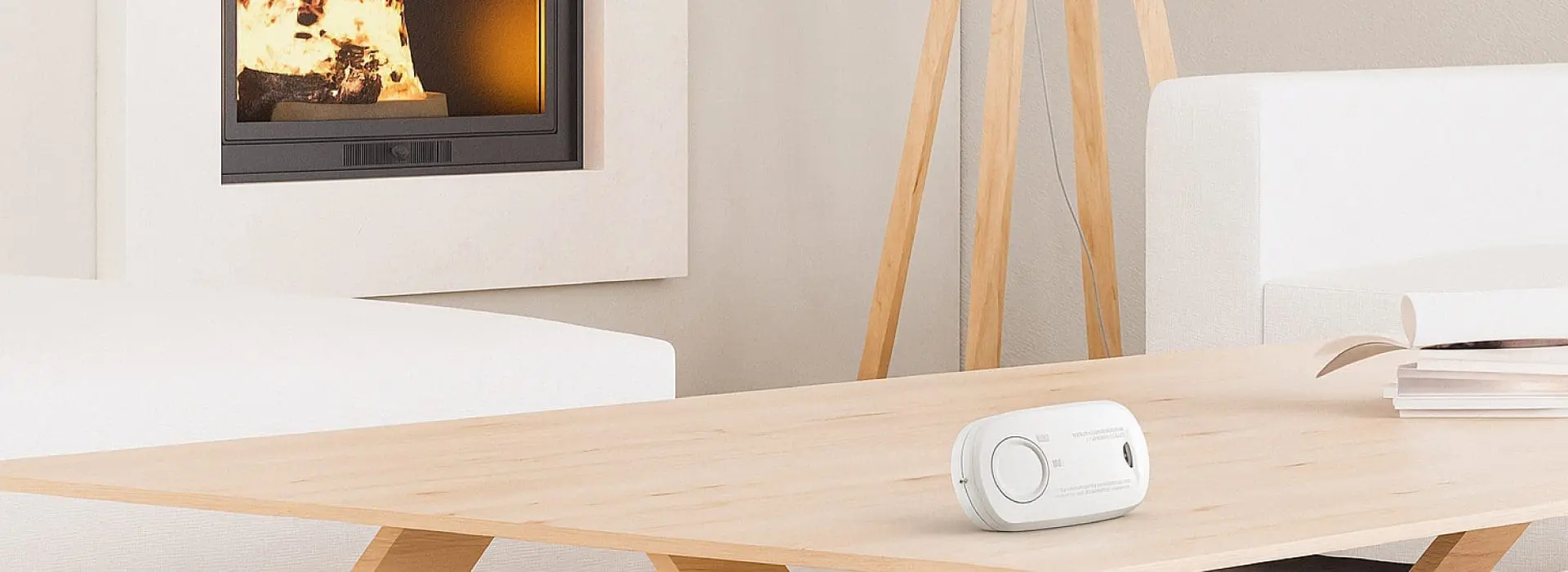
Stay warm this autumn safely. Expert tips on using heaters, fires and vents from FireAngel UK.
As temperatures drop, many use portable heaters, light fires, or block vents to stay warm. While common, these habits increase the risk of fire and carbon monoxide (CO) incidents.
Here’s how to keep your home warm and comfortable this autumn without compromising on safety.
Using portable heaters safely
Portable heaters are a quick and convenient way to heat specific areas of the home, but they remain a frequent cause of accidental fires.
London Fire Brigade responds to around 160 heater-related fires each year, with a third of fatal incidents involving heaters placed too close to combustible materials.
Wondering how to use portable heaters safely? Here’s what to do:
Keep a clear space: Place heaters on a stable surface and keep at least 1 metre away from curtains, bedding and furniture.
Plug directly into a wall socket: Avoid extension leads or multi-socket adaptors, which can overheat.
Never leave heaters unattended: Switch them off when leaving the room or going to sleep.
Check regularly: Inspect cables and plugs for damage, and follow manufacturer guidance for use.
Choose safer types: Oil-filled radiators carry lower fire risks than exposed-bar or fan heaters.
Used correctly, portable heaters can warm your space without putting your family at risk.
Being cautious of open fires and wood-burning stoves
Few things feel more comforting in autumn than gathering around an open fire or wood-burning stove. However, these traditional heating methods require careful maintenance.
There are approximately 3,800 chimney fires in England every year, and most are caused by a build-up of soot and creosote that could have been avoided through regular sweeping and servicing.
Chimneys and flues should be inspected and swept by a professional at least once a year, or more often if you use your fire regularly.
Only burn seasoned wood or approved smokeless fuels to reduce the production of soot and harmful emissions.
Fires should never be left unattended, and they must be fully extinguished before going to bed or leaving the house.
It’s also important to install a carbon monoxide alarm in rooms with open fires or stoves to provide an early warning if combustion gases are not properly vented.
Keep vents and flues clear
When the cold sets in, it’s tempting to block vents to stop draughts, but doing so can be dangerous.
Vents, air bricks and flues play a crucial role in allowing appliances to burn fuel safely by providing a steady supply of oxygen and allowing harmful gases to escape. If they’re obstructed, appliances may not burn fuel completely, increasing the risk of carbon monoxide build-up.
Vents should always remain open and free from obstructions, and flues should be checked regularly to ensure they’re clear and in good working order. Annual inspections by a Gas Safe registered engineer are essential for gas appliances to confirm they are operating safely and efficiently.
Maintaining proper ventilation is one of the simplest yet most effective ways to prevent CO incidents in the home.
Install and maintain smoke, heat & CO alarms
As we spend more time indoors and use heating more frequently in autumn, we become more reliant on smoke, heat and CO alarms to keep us safe.
FireAngel offers a wide range of interlinked smoke, heat and CO alarms, which can alert you throughout the home, proving crucial if an incident occurs at night or in a different room.
Install smoke alarms on every floor, in hallways and landings.
Use heat alarms in kitchens or areas prone to steam or dust.
Fit CO alarms in any room with a fuel-burning appliance (boilers, open fires, stoves) and near sleeping areas.
Test alarms monthly and replace batteries or units according to manufacturer guidance.
If you feel unsure about anything mentioned in this blog, feel free to get in contact with our Customer Service Team who will be able to advise you on any products mentioned above.
Introducing our Ultra Slim Smoke and Carbon Monoxide Alarms
Can a carbon monoxide detector detect gas?
How many carbon monoxide alarms do I need?
New home checklist: Why a Carbon Monoxide alarm is essential
Travel safety essential checklist for a holiday to remember
Got a burning question? Get in touch
If you can't find what your looking for on our blogs and looking for further guidance and advice, our UK-based Customer Support team are on hand all week from 8:30am until 5:30pm, they can answer any further queries you may have on our products, solutions or services.